
Multiple Palestinian elections in 2026
But will they result in the emergence of new leadership including Marwan Barghouti?

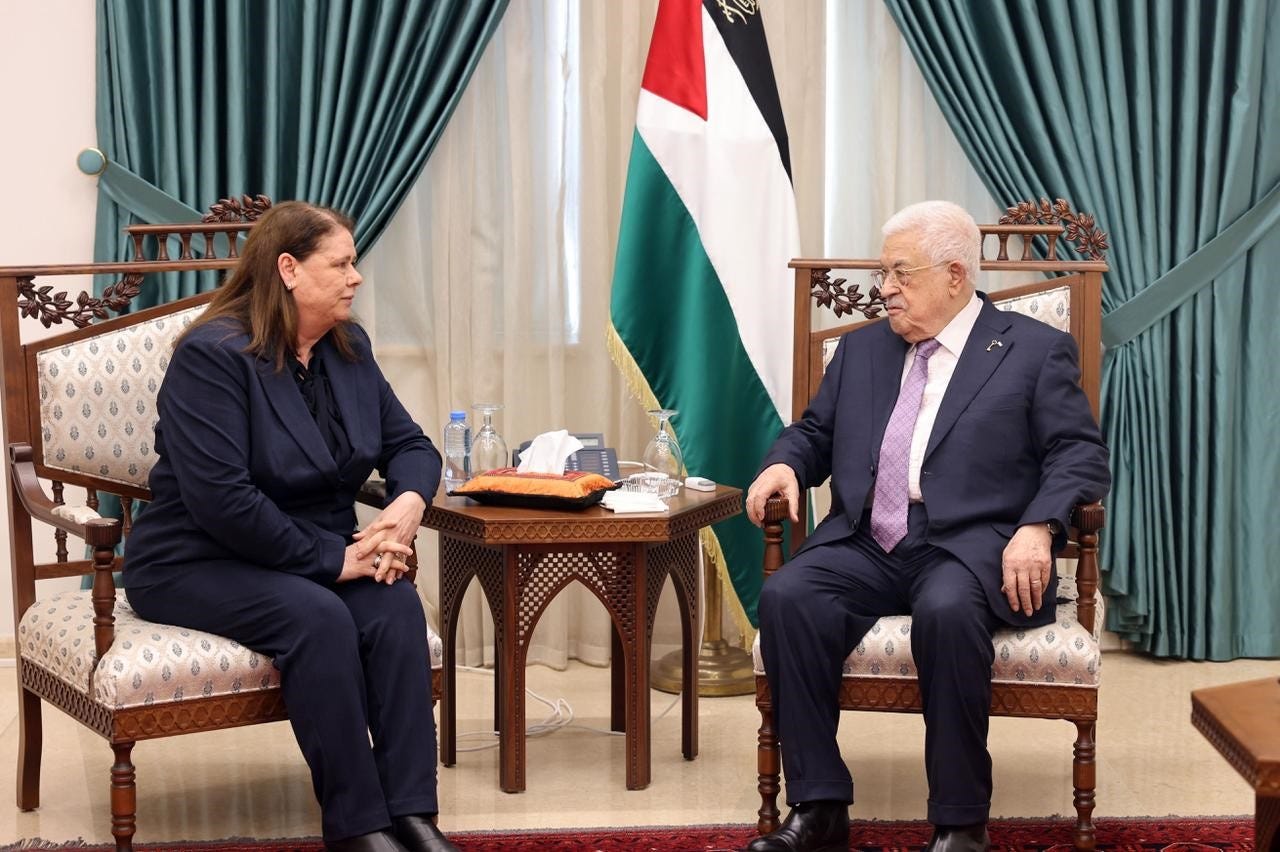
A series of local, party, and national elections is set to take place in Palestine and for Palestinians around the world in 2026. The elections were confirmed with a presidential decree issued on Monday. In addition to the municipal elections set to take place on April 25, elections for the all-important Palestinian National Council, which is often referred to as the Palestinian parliament in exile, will take place on Nov. 1.
While the diaspora elections will take place where possible around the world, the West Bank and Gaza representatives in the Palestinian National Council will be decided in Palestinian legislative elections that will also presumably take place on Nov. 1. It is unclear if presidential elections will take place on the same day or if the newly elected parliament will be asked to decide and confirm the president of the state of Palestine.
In addition, the powerful Fatah movement, to which Palestinian President Mahmoud Abbas and the imprisoned Marwan Barghouti belong, will hold its long-awaited eighth congress on May 14 in Ramallah.
The Barghouti wing of the Fatah movement is likely to win big when the movement holds its repeatedly delayed congress
Daoud Kuttab
While all these elections are long overdue, they are also part of a Palestinian reform process committed to by Abbas and announced during last September’s UN General Assembly. Both the US and Israel, as well as Arab states, have conditioned cooperation and support for the Ramallah leadership on it reforming its policies. Many global and regional politicians, who themselves have not adhered to high democratic standards, want the Palestinian government under occupation to get rid of its corrupt practices.
The new electoral process, however, has many challenges. Municipal elections, for example, will take place in most of the West Bank’s cities and townships, but only in the city of Deir Al-Balah in Gaza. While elections will be held using the proportional representation system and will include a 30 percent quota for women, members of Hamas and those publicly adhering to its principles will not be allowed to run. This issue is couched in a form that all candidates must sign, which will be difficult for supporters of the Islamist movement to sign.
It is also not clear if East Jerusalemites will be allowed to vote at the six locations in the city approved in the 1993 Declaration of Principles. In recent years, right-wing governments in Israel have refused to honor this clause of the Oslo Accords. The Israeli refusal led to the postponement of legislative and presidential elections back in April 2021. However, some have argued that the decision was based more on the concern that Barghouti, who had aligned himself with Nasser Kidwa, could win the elections.
The Barghouti wing of the Palestine Liberation Organization’s leading Fatah movement is likely to win a significant victory when the movement holds its repeatedly delayed congress. The congress normally elects the powerful 21-strong Fatah Central Committee and 100-member Fatah Revolutionary Council. Already, local branches of the movement have been holding elections to choose representatives to the congress; however, the formerly strong Gaza-based wing, headed by Mohammed Dahlan, will not be part of the congress at this moment. Barghouti loyalists, including Nasser Kidwa and lawyer Fadwa Barghouti, Marwan’s wife, have been reinstated, which will certainly strengthen the wing of the imprisoned popular leader.
Amid the effort to keep Hamas and other Islamists out of the running for the elections, the need to sign the ideological form might stop others, including left-wing factions and their supporters, from participating.
Elections held under occupation also have a number of other challenges. Israel, as an occupying force, can and has in the past interfered in elections by detaining candidates or otherwise preventing them from running. Although Palestinian election laws do not prevent prisoners from participating in elections, physically detaining them prevents them from canvassing and attending rallies.
The status of Gaza by October might also make it difficult for candidates, especially those running for national positions. Travel restrictions, particularly in the case of prisoners like Barghouti, will make it hard for nominees to be present at election rallies. The new arrangements in Gaza under the control of the Trump administration, with strong involvement from the Israeli occupiers, might make free and fair elections in the Strip next to impossible.
The same difficulties might be seen in the elections for the Palestinian National Council. The presidential decree that assigned supervision of all elections to the Palestinian Central Election Commission states that such elections should be held wherever possible. For decades, it has been known that no elections for the Palestinian National Council will be held in Jordan, which hosts the largest number of Palestinians outside Palestine. Who will decide which Palestinians will be nominated and how that process will take place remains a mystery.
2026 might be the year of Palestinian (and Israeli) elections, but it is difficult to predict how elections restricted by external powers will be considered free and fair. It is even more difficult to expect that elections alone, both under occupation and in the diaspora, will produce genuine reform that will please occupiers who use this issue as a reason not to negotiate the future of Palestine with its partially representative elected leaders.
@arabnews