
Jerusalem on the Brink: The Danger of Breaking a Centuries-Old Status Quo
Jewish extremists led by the Police Minister are brazenly playing with fire


One of the most important pillars of peace in Jerusalem is the status quo agreement that has governed the city’s holy places since the 19th century. Its principle is simple but profound: each faith community has the exclusive right to worship in its own sanctuaries. That delicate balance has preserved relative calm for generations. In fact, it was reaffirmed as recently as Nov. 13, 2014, when Israeli Prime Minister Benjamin Netanyahu and Jordan’s King Abdullah, standing alongside then–US Secretary of State John Kerry, declared: “Al-Aqsa is for Muslims to pray and for all others to visit.”
But this principle, the very bedrock of Jerusalem’s fragile peace, is now under serious threat.
Escalating Violations
In recent years, Jewish groups have entered the Al-Aqsa Mosque compound without coordination with its Muslim custodians or the Jordanian waqf, which has long overseen the site. These incursions have grown in both size and frequency. Waqf guards, employed by Jordan, have been blocked from enforcing the rules that once ensured calm.
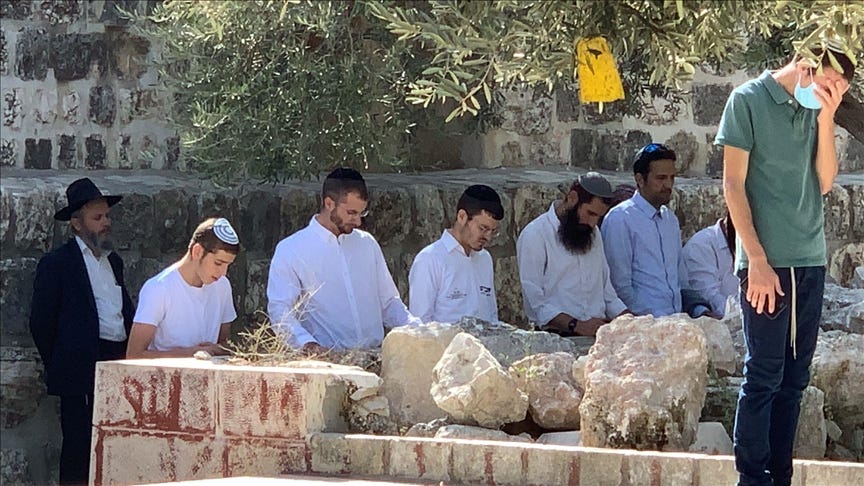
The violations reached a dangerous new level on Aug. 3, when Israel’s National Security Minister Itamar Ben-Gvir entered the mosque compound with a large group of supporters and openly conducted Jewish prayers — a flagrant breach of the agreement. Video circulated by a pro–Temple Mount group documented the act, shocking Jordan and the wider Islamic world.
Just days later, foreign ministers from 31 Arab and Islamic countries, joined by the Arab League, the Organization of Islamic Cooperation, and the Gulf Cooperation Council, condemned Israel’s actions as “settler terrorism” and warned of the escalating dangers.
And yet, the Israeli prime minister’s office continued its familiar refrain, telling Reuters that the status quo “has not changed and will not change.” That denial is divorced from reality.
A Powder Keg Waiting to Ignite
The danger lies not only in these rituals but in what they symbolize. The Al-Aqsa compound is a focal point of faith and identity for Palestinians, Arabs, and Muslims worldwide. Every major Palestinian uprising has been sparked, at least in part, by perceived threats to the mosque.
The status quo was designed precisely to prevent Jerusalem from becoming the epicenter of religious war. Breaching it undermines Jordan’s internationally recognized custodianship, destabilizes regional relations, and violates international law. If left unchecked, it risks unleashing uncontrollable violence that could extend far beyond the city’s walls.
Even respected Israeli scholars have sounded the alarm. Yitzhak Reiter, president of the Middle East and Islamic Studies Association of Israel, told Jerusalem Story: “We have long since passed the tipping point and the point of no return. The police control Al-Aqsa today. As long as Ben-Gvir is minister of police and this government remains in power, this process will continue gradually but steadily.”
Beyond Al-Aqsa
Some may argue that these provocations pale compared with the humanitarian catastrophe unfolding in Gaza. Others point to Netanyahu’s rhetoric about fulfilling a “historic and spiritual mission” to create a “Greater Israel.” But to treat the Al-Aqsa question as secondary is a grave mistake. The compound has long been the spark that ignites wider conflagrations. Threats to its sanctity resonate far beyond Palestine — they reverberate across the Arab and Islamic worlds.
Meanwhile, Israel’s relentless effort to block Palestinian statehood is running up against growing international recognition of Palestine. Combined with provocations at Al-Aqsa, this creates a combustible mix — a political and religious powder keg waiting to ignite.
The Urgent Call for Action
Preserving the centuries-old status quo is not just about upholding tradition. It is about preventing catastrophe. Arab and Muslim states have been vocal, but Western powers, especially Washington, remain conspicuously silent. Silence in the face of such violations is an abdication of responsibility.
The international community must act now. It must send an unequivocal message: any violation of the historic status quo at Al-Aqsa will not be tolerated. Upholding this agreement is not only a matter of religious freedom or legal obligation. It is essential to regional stability and global peace.
If the erosion of the status quo continues unchecked, Jerusalem could once again become the flashpoint for a broader explosion — one that no government will be able to contain.
The world ignores this danger at its peril.